Carp served on Grandma's festive tableware, on the same table that in childhood served you as a hideout and caroling according to a songbook with already yellowed pages. All of this has its unique charm and makes the last few days of December taste completely different from the rest of the year.
If, however, you want to spend this Christmas a little differently, and listen to carols in a language a little less rustling than Polish, come to Kashubia for the holidays. Here, in peace and with sea air in your lungs, you will rest and discover this interesting region of Poland adorned with Christmas customs and symbols.
In this article, you will learn:
what Gòdë in Kashubia are and where this name comes from,
what the most important Christmas traditions and customs in Kashubia are,
what distinguishes Christmas Eve in Kashubia
which traditional Christmas Eve dishes reign on the Kashubian table,
how contemporary Christmas is celebrated in Kashubia by the Polish sea
What are Gòdë in Kashubia and where are they celebrated?
The word Gòdë in Kashubian means the festive time, that is, the period from Christmas Eve until the Feast of the Three Kings. Gòdë is more than just the holidays themselves; it is a time when life in Kashubian villages and small towns slows down to give people time for meetings, joint caroling, and chatting at festively set tables.
Gòdë in Kashubia have deep roots in folk culture. Catholic traditions, old folk beliefs, and strong attachment of Kashubians to the land, sea, and nature intermingle here.
Gòdë are widely celebrated in Kashubia, from seaside towns such as Jastrzębia Góra, Puck, Władysławowo or Hel, to villages hidden in the forests and among the lakes of Kashubian Switzerland.
Kashubian traditions for the holidays – customs from Christmas Eve to the Three Kings
In Kashubia, the holiday period is full of deeply rooted customs that have survived generations.
Christmas Eve in Kashubia – traditions, magic and a bit of mystery
Christmas Eve in Kashubia cannot start before the appearance of the first star. When it appears, household members share the wafer and sit down at the Lenten table. Importantly, sharing the wafer in many village homes also includes the four hooved members of the household, such as horses or cows. What other traditions can be found during Christmas Eve in Kashubia?
From old beliefs comes the conviction that Christmas Eve evening has divination powers. Therefore, in Kashubia straw was placed under the tablecloth in memory of the manger but also for luck.
People also carefully observed candle flames because a calm flame meant a prosperous year.
In traditional Kashubian homes, during the Christmas Eve dinner, it was ensured that no one left the table without a valid reason, as it could mean that “luck had left the house.”
In the Kashubian countryside, Christmas Eve is also a time when the dead are especially remembered. An empty place is left for them, and after dinner the table is often not cleared immediately “because the souls might come to have a treat.”
Between Christmas and New Year – carolers, the star and the devil
After Christmas Eve, the real time of Gòdë in Kashubia begins, that is, the period of caroling.
In the past, carolers with a star walked the villages, disguised as death, the devil, Turonian, goat or bear, as well as children singing carols in Kashubian and Polish.
Carolers brought the hosts good humor, wishes of prosperity and abundance, and in return received cakes, fruits, and sometimes small donations.
New Year's Eve in Kashubia – fortunes and New Year's wishes
In the past, New Year's fortunes were an indispensable part of New Year's Eve celebrations in Kashubia. It was believed, among other things, that the first person to cross the doorstep of the house in the New Year could bring either good luck or bad luck, and that the way you spend the first hours of the new year would affect your success in the following months.
Although New Year's Eve fortunes are no longer as popular as before, many Kashubians still maintain another custom to this day. New Year's visits with wishes of health, successful catches or good work remain a lively part of the celebrations, especially among the older Kashubians.
Three Kings – the house under care
The period of Gòdë ends with the Feast of the Three Kings. In Kashubian homes, incense and chalk are blessed, and the well-known inscription with the letters K+M+B and the year appears on the door.
Processions of the Three Kings are also becoming increasingly popular. These colorful and joyful parades attract both residents and tourists. If you spend Christmas in Kashubia and stay longer, this is a great opportunity to end your holiday stay in a truly exceptional, royal way.
Traditional dishes – what do Christmas Eve dumplings taste like by the sea?
There are no Gòdë without a table laden with food inspired by what the sea, forest, and fields provide.
Kashubian Christmas Eve usually starts with soup made from dried mushrooms or borscht, often with homemade dumplings.
Then, various forms of herring in oil, vinegar, with onion, sometimes with cranberry, appear on the table.
Next come other fish, fried, baked and in aspic.
On the Kashubian Christmas Eve table, there will also be cabbage with peas or mushrooms and compote made from dried fruit, thick, aromatic and smelling of smoked plums.
Compote from dried fruit is a favorite of many, but dumplings are the uncompromising winner of Christmas Eve tables, not only in Kashubia.
In Kashubia, you will most often find dumplings with cabbage and mushrooms, with buckwheat, but also with fish fillings.
Contemporary Gòdë in Kashubia
Do today's Christmas celebrations in Kashubia look the same as they did several decades ago? Of course not.
More and more people choose to spend the holidays away from home, in apartments, guesthouses, and hotels. Kashubian carols mix on playlists with Christmas hits like “Last Christmas” or “Jingle Bells.” Next to traditional dumplings with buckwheat, we place vegan dumplings with tofu.
Nevertheless, in many towns, Christmas markets, carol concerts, live nativity scenes, processions and local events are organized, attracting guests from all over Poland, as well as from Germany and the Czech Republic.
The hospitality of the Kashubians, attachment to nature and family gatherings at the table are still alive, which consistently guarantees the unique atmosphere of Christmas in this region.
Finally, the proximity of nature, the sound of the sea, mysterious forests and Kashubian lakes create a beautiful, unique setting to be close to loved ones during the special time of Christmas, or Kashubian Gòdë.
Christmas by the sea in Jastrzębia Góra – why is it worth it?
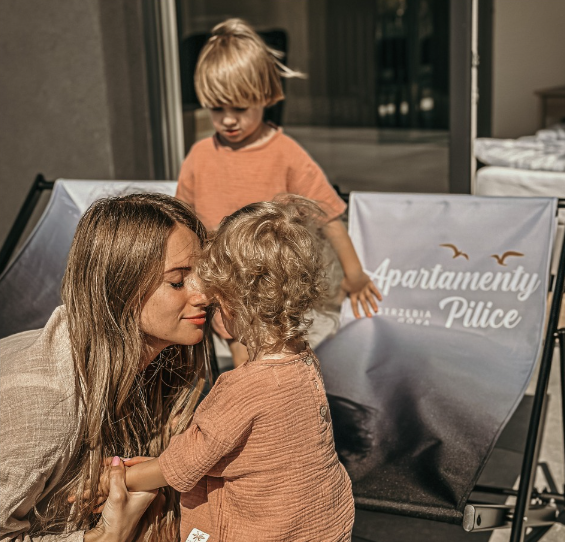
If you want to experience Christmas Eve in Kashubia this year but at the same time value comfort, privacy and peace, Jastrzębia Góra and Apartamenty Pilice will be a perfect choice.
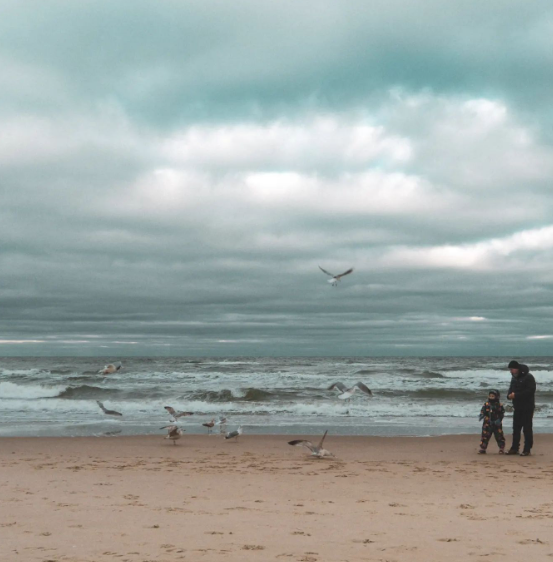
It is an ideal place for families with children who want to combine the Christmas atmosphere with winter walks on the beach, couples looking for quiet, atmospheric holidays by the sea, and busy people who finally want to rest from cooking, cleaning and holiday pressure.
By booking Christmas by the sea at Apartamenty Pilice, instead of making dumplings, you can order Christmas catering from Restauracja Papaj.
→ Instead of washing and ironing Christmas tablecloths, you can take a walk along the cliff in Jastrzębia Góra.
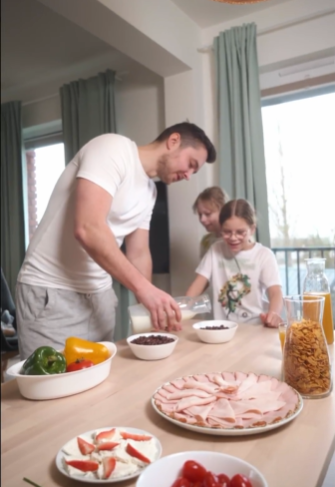
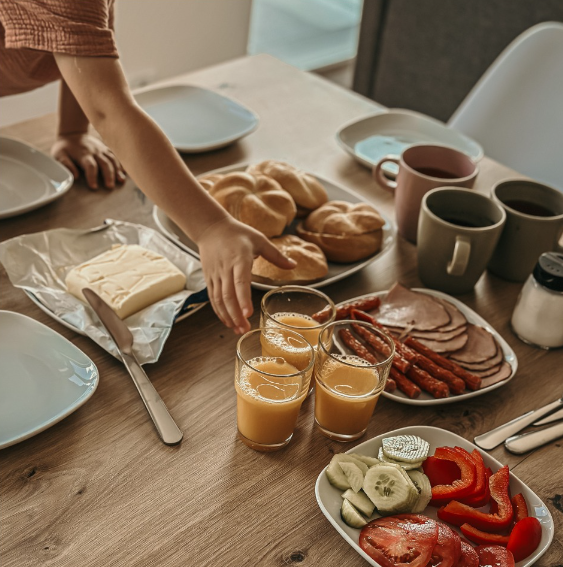
→ Instead of getting up at dawn to prepare Christmas breakfast for guests and household members, you can drink your morning coffee with a view of the winter sky over the sea, and then have a peaceful breakfast at a large table or on a comfortable sofa.
→ Instead of washing dishes after Christmas dinner, you can wrap yourself in a blanket and make plans for the new year with loved ones in a cozy apartment.
If you dream of a Christmas during which you will truly rest, check available dates and book your stay in Jastrzębia Góra.
Let this Gòdë be different from all others and let us host you by the sea, as befits the Kashubians.